
Whole-home Generac and Cummins backup systems, installed the way I'd install one at my own house. Transfer switches, load calculations, permits, and inspections, all handled.
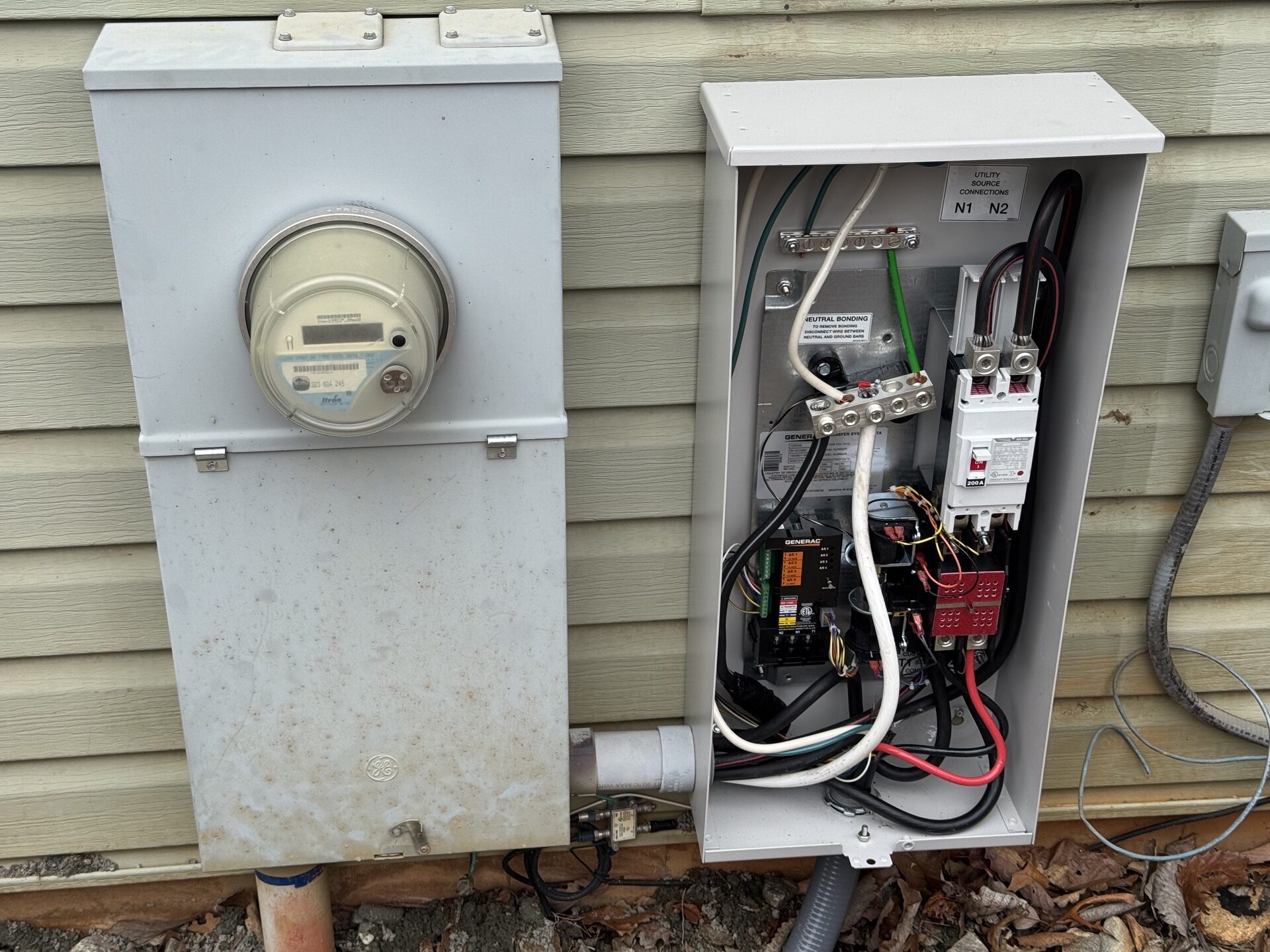
A whole-home standby generator wired to an automatic transfer switch means you don't wait for the power company, and you don't string extension cords through your kitchen. When utility power drops, the generator is running and the house is back on in about 15 seconds. No human involvement required.
I install Generac Guardian and Cummins QuietConnect systems from roughly 14kW through 26kW, appropriately sized for the homes I see most often in Seneca, Salem, Westminster, and the Lake Keowee communities. I also handle transfer switch replacements, propane/natural gas connections (coordinating with your gas fitter), and pad preparation.
The install is permitted with your county AHJ, load-calculated against your actual panel, and tested end-to-end before I leave. You also get walked through the monthly exercise cycle and what to do if the unit ever throws an alarm.
Not every home needs one. Here's when the math usually works.
Lake Keowee, The Cliffs, Keowee Key, and the surrounding rural roads see longer outages than town service. Standby power is usually justified.
CPAP, oxygen concentrator, well pump for drinking water, septic lift station, insulin refrigeration, standby becomes more than convenience.
Extended outages during hurricanes, ice storms, or derechos can destroy a freezer's worth of food and knock out your ability to work remotely.
I walk the house with you to identify must-have loads (AC, well pump, fridge, office) and right-size the unit. Oversized costs money you don't need to spend; undersized leaves you in the dark.
Permits pulled with your county AHJ. Concrete pad or composite base sized correctly. I coordinate with your propane supplier or gas fitter for the fuel line. HOA paperwork handled on request.
Transfer switch wired between utility and panel, generator commissioned, full outage test performed. You get a walk-through of operation, monthly exercise, and what to do if it alarms.
Real numbers from quotes I wrote this summer for lake houses in Salem, Seneca and Anderson. Every price below is turnkey: the generator, automatic transfer switch, load management, whole-house surge protection, wiring, permit, inspection and startup. Your written quote is fixed before I order anything.
Well pump, fridge and freezer, lights, one AC. Cabins and smaller homes.
Adds a second AC or an electric water heater to the 14kW list.
The usual pick for a three-bedroom lake house with one HVAC system.
Two HVAC systems plus two electric water heaters. The honest minimum for a big two-story lake house.
Whole house with nothing managed, and room for a hot tub and an EV charger.
A standby generator is an eight-to-fifteen year piece of equipment. The install matters more than the brand.
A whole-home standby generator is the gold standard. But if you're not ready to spend that, a code-compliant 50-amp generator inlet wired to your panel with a UL-listed interlock kit lets you safely run your existing portable generator into the house. No extension cords, no death-by-melted-cable, no killing the lineman working on your service drop.
I install these in an afternoon for a fraction of the cost of a full standby. Here's a real install I shot, plug in your portable, flip the breaker, run lights, fridge, well pump, whatever circuits you choose:
Full pricing, panel compatibility, and FAQs: generator interlock kit installation. Weighing it against a transfer switch? Honest comparison here.
If a standby's not in the budget yet, this is the next-best safety upgrade. Call (864) 351-7898. I'll quote it over the phone in 5 minutes.
Have a question not listed here? Call or text (864) 351-7898. I'm happy to talk through it.
Turnkey installs run from about $10,500 for a 14kW unit to about $16,900 for a 28kW, with 22kW around $11,900 and 26kW around $13,900. That covers the generator, transfer switch, load management, surge protection, wiring, permit, inspection and startup. Fuel line and pad are quoted separately. I give a fixed written quote before starting. No squishy ranges.
Both are solid. Generac has broader local dealer and service coverage around Oconee and Pickens County. Cummins units tend to run quieter at the same kW rating. I'll give you a straight opinion for your specific situation.
I don't do fuel-line work, that's gas fitter territory. But I coordinate the schedule with your propane supplier or plumber so your install lands in one coordinated effort, not three separate stressors.
Yes. All permits pulled with the county AHJ in your name. You get the signed inspection paperwork at closeout.
Most installs wrap in 2 to 3 days of actual electrical work once permits, pad, and gas are coordinated. The whole project cycle (site visit → unit delivered → installed → inspected) typically runs 3 to 6 weeks depending on equipment stock.
I install, test, and handle electrical troubleshooting. Annual service (oil, filters, firmware) is best left to a factory-authorized service tech. Happy to recommend one.
Send me your address and roughly what you want to keep running. I'll size it, price it, and put the number in writing.
Let's walk your panel, size it right, and get a written quote on your desk this week.